A Sunday at the Founders' Mixer
The most useful thing an event can do is remove its own programme.
Most have one. A schedule of sessions. A keynote to open. Panels with names and titles on placards. A structure that tells you where to be and when, and what the event is trying to say.
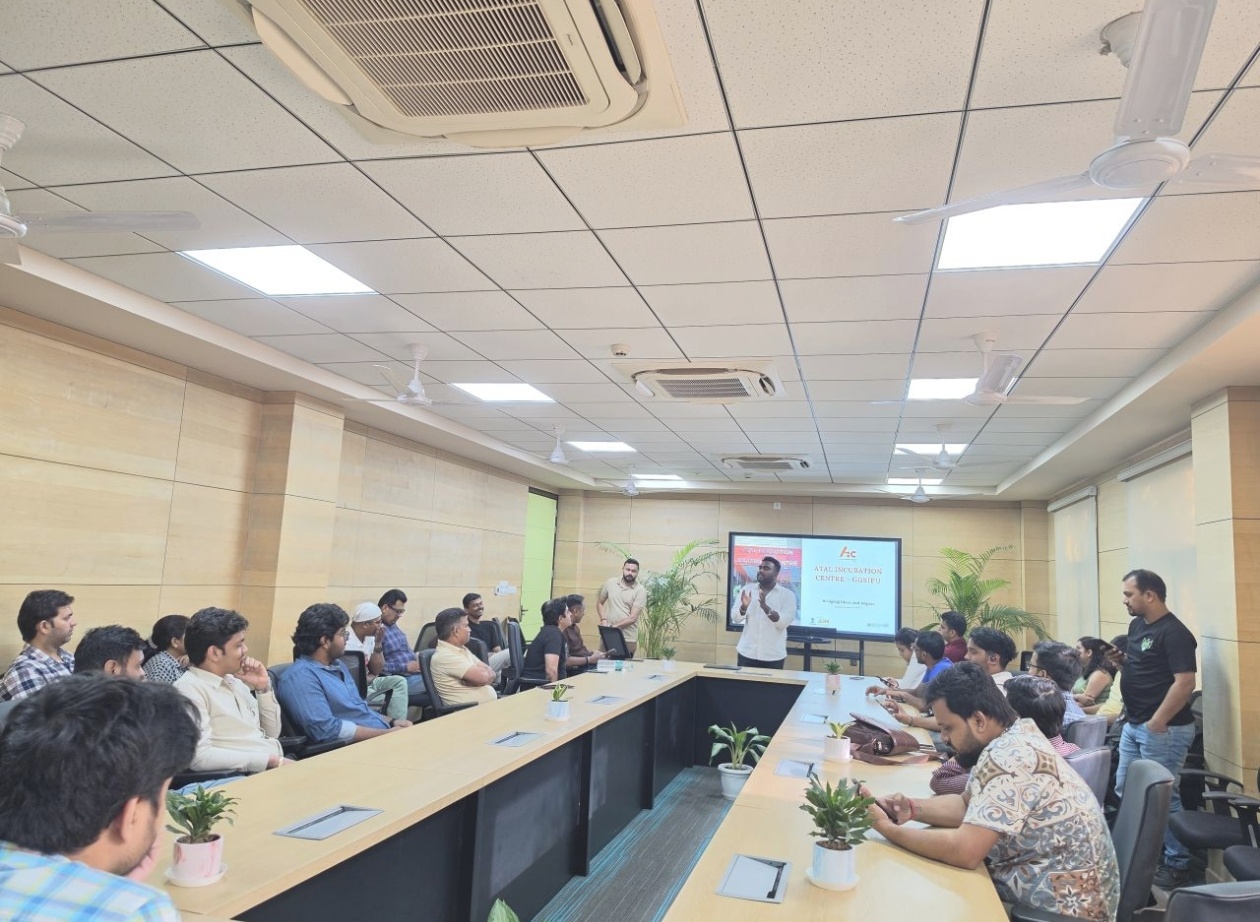
The Founders’ Mixer hosted by Atal Incubation Centre GGSIPU, in collaboration with CEDAT and Bizowl, had almost none of that. It was, mostly, a room of people talking to each other.
That sounds unremarkable. It was not. Strip the programme and you find out what founders actually think, which is the only information in the room worth having.
What mixers actually are
I have been to a lot of networking events. The majority of them are not really networking events they are events with networking time attached. The main thing is the content, and the networking happens in the margins, between sessions, while people are looking for a seat or waiting for the next speaker.
A mixer is a different format. The conversation is the content. There is no fallback. You either talk to people or you are just standing there.
What that format does, when it works, is force a kind of honesty that structured events rarely produce.
In a panel, the incentive is to have a take. To say something quotable. To represent a position cleanly.
In a room where the only agenda is the conversation itself, people tend to say what they actually think. What is actually hard about what they are building. What they have tried that did not work. What they are still trying to figure out.
That is what made Sunday interesting.
The people in the room
The AIC GGSIPU incubator context shaped who was there in a specific way.
These were not people who had already made it not the polished founder archetypes who show up to events to be seen. They were people at earlier, more honest stages: figuring out their model, looking for co-founders, trying to understand whether the problem they had chosen was the right one.
That earliness made the conversations more direct.
I talked to people working across domains I would not have sought out deliberately: logistics, vernacular content, B2B services, applied ML in sectors that do not generate much press. The kind of work that is unglamorous and specific and matters more than most of what gets written about.
What stayed with me was not any single idea but a pattern across the conversations: almost everyone was building something because they had been personally frustrated by a problem. Not because they had spotted a market gap on a spreadsheet, but because they had lived something that did not work and decided to fix it.
That motivation tends to produce different companies than the top-down kind. More stubborn. More willing to stay in the problem when it gets complicated. My own bet is that this is where the durable businesses come from, because the founder does not lose interest when the market takes longer than the deck said it would.
On the incubation context
There is something specific about the energy around university-linked incubators that I find worth paying attention to.
The AIC GGSIPU incubator sits inside an institutional context that is not purely startup-world. The founders coming through it have a different relationship to risk, to timeline, to what success looks like in the near term.
Some of that creates friction institutional timelines do not always match startup timelines, and the support structures are not identical to what you get in a pure startup ecosystem.
But some of it is useful. There is less performance. Less of the pressure to seem further along than you are. Founders in this environment tend to be more willing to say “I do not know yet” which, in my experience, is usually the more accurate and more productive position to start from.
CEDAT and Bizowl adding their networks to the room created a useful mix people at different stages, from different entry points into the ecosystem, who would not normally be in the same conversation.
The conversation I keep thinking about
I will not name names, but one conversation in particular has stayed with me.
Someone building in a space that has been attempted several times before a domain where there are already players, where the obvious approaches have already been tried and struggled. They knew this. They had thought carefully about why the previous attempts had not worked and had a specific thesis about what was different now, technologically and also in user behavior and regulatory context.
What struck me was how unsentimental they were about it. No pitch energy. No narrative about disruption. Just: here is what I think is true, here is what I am testing, here is what would change my mind.
That kind of thinking is rare. It is also, in my experience, the thing that most strongly predicts whether someone will actually figure it out. A founder who can state their own disconfirming evidence is the one I would back.
What these rooms are actually for
I have been trying to articulate to myself why I keep showing up to events like this mixers, sprints, informal gatherings when my instinct is usually to protect time rather than spend it in rooms.
The honest answer is calibration.
When you spend most of your time in your own work, your sense of what is hard, what is normal, what is possible gradually drifts toward whatever your immediate context tells you. You start to mistake your own assumptions for ground truth.
Spending a few hours in a room with founders who are building different things in different domains, with different constraints and different starting points, updates that picture in ways that are hard to get otherwise.
Not because any single conversation is revelatory, but because the aggregate, the pattern across what people are working on, what they are stuck on, what they are excited about, tells you something about the actual shape of the landscape.
You cannot buy that picture and you cannot read it. You have to be in the room. That is worth a Sunday.
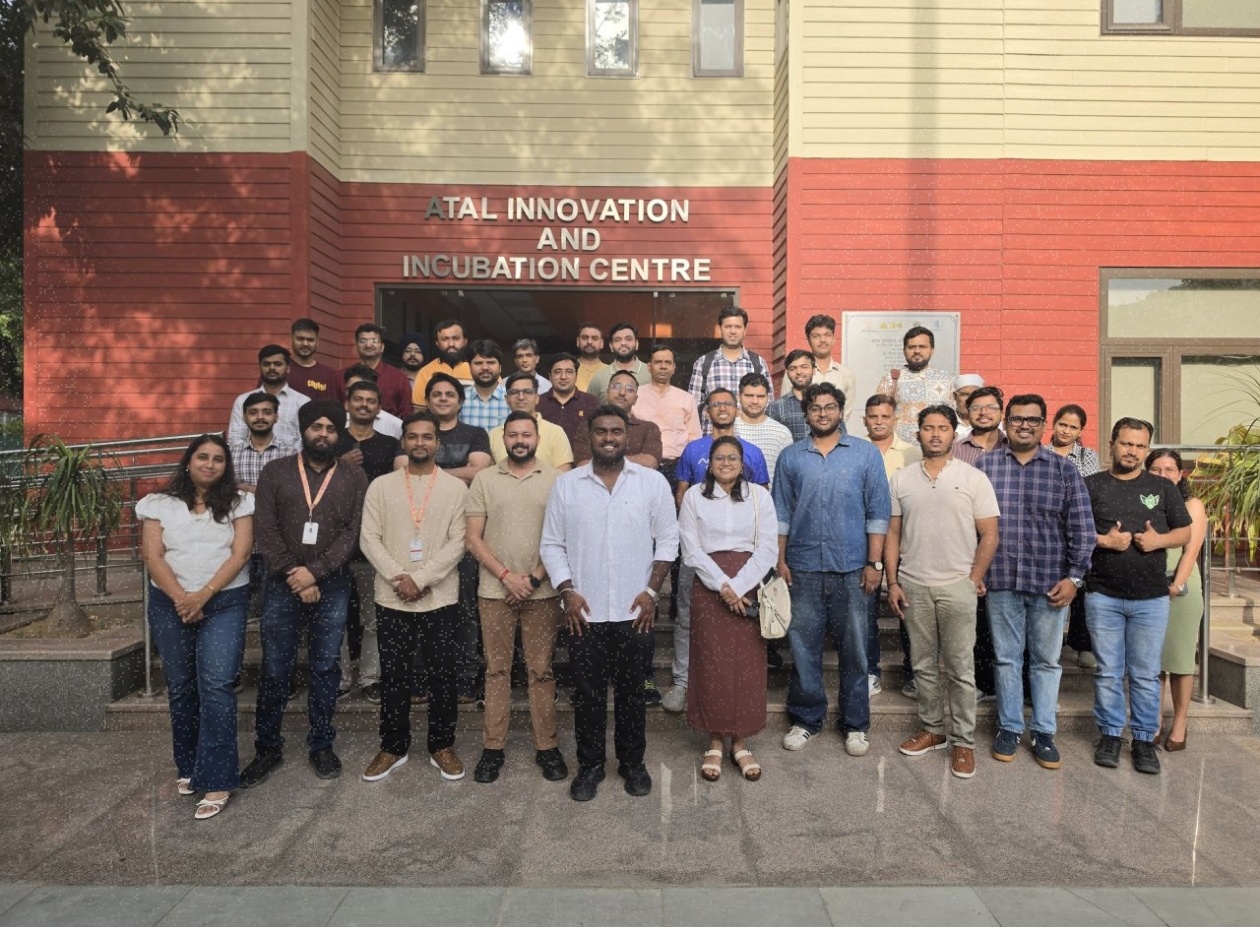
Thanks to Atal Incubation Centre GGSIPU, CEDAT, and Bizowl for putting the room together.
Related: