BeCon 2026: Notes from a Weekend That Stayed With Me
Arriving at IIT Delhi
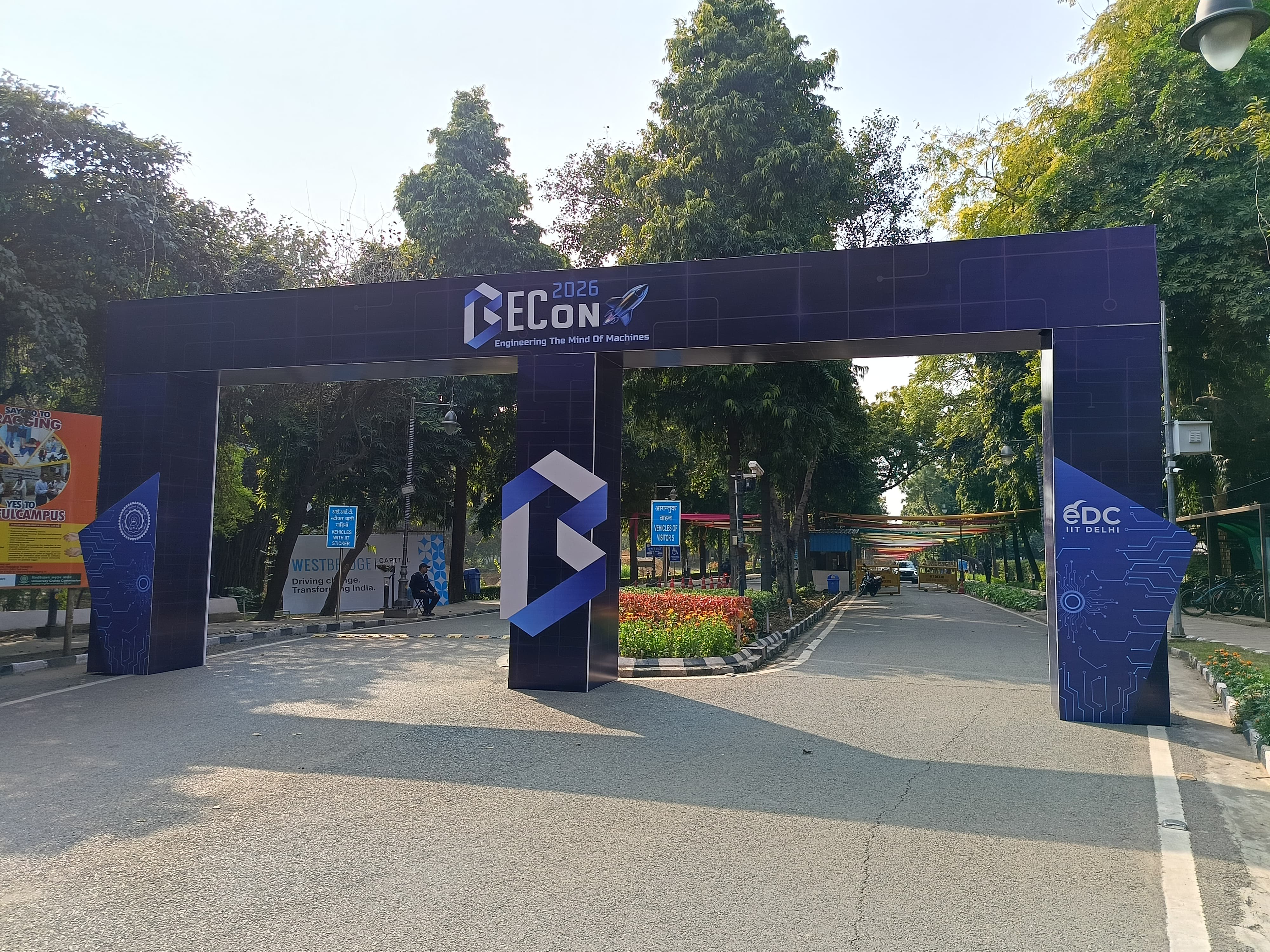
Most startup conferences are a market for attention. BeCon was closer to a market for problems.
It has been a little over a week since I attended BeCon at the Indian Institute of Technology Delhi on 31 January and 1 February 2026, and the experience has stayed with me longer than I expected.
When I first reached campus that Saturday morning, I was mostly curious. I had attended similar events before and expected the same thing: a crowd of people in blazers, the same buzzwords echoing off the walls (“disruption,” “scale,” “ecosystem”), and a vague sense of optimism that evaporates the moment you step outside. Instead, walking between venues and overhearing conversations about products, research, funding, and technology, it became clear that this gathering had a different texture. This wasn’t just about startups; it felt like the starting blocks of a much bigger, more deliberate race of development.
The event, organized by the Entrepreneurship Development Cell IIT Delhi, was less a showcase than an ecosystem compressed into a weekend: academic research, entrepreneurial ambition, and real-world impact in one place.
The day opened with Shri Devesh Shrivastava, Special Commissioner of Delhi Police. He gave what amounted to a briefing. He talked about hackathons they’d run, real problems they’d solved with entrepreneurs during COVID, and then laid out a list of what they still desperately need: tamper-proof IMEI tech, smarter traffic systems, AI for hotspot analysis, and more. He was reading out a procurement list. That is a demand signal, stated in public, by the buyer, and it is the thing most Indian deep-tech founders spend years trying to find. It set the tone immediately: this was about building for the state, with the state. The most interesting problems, it turns out, aren’t always in the consumer store.
After that, I went to the Startup Clinic. This was the messy, brilliant heart of it all. Tables filled with prototypes, founders with that tired-but-focused look in their eyes. Yes, there were apps with modern solutions for delivery and wellness, but what stopped me were the ones wrestling with physics and chemistry.
I met a team building Iron-Air batteries: the kind of tech that could change the energy game if they get it right. Another was deep in quantum key distribution. There were smart textiles that could do more than just look good, and antimicrobial walls for hospitals. All of it was materials science at the base. Chatting with the founders, the passion was for the problem itself. You could feel the difference.
Listening to builders, not just speakers
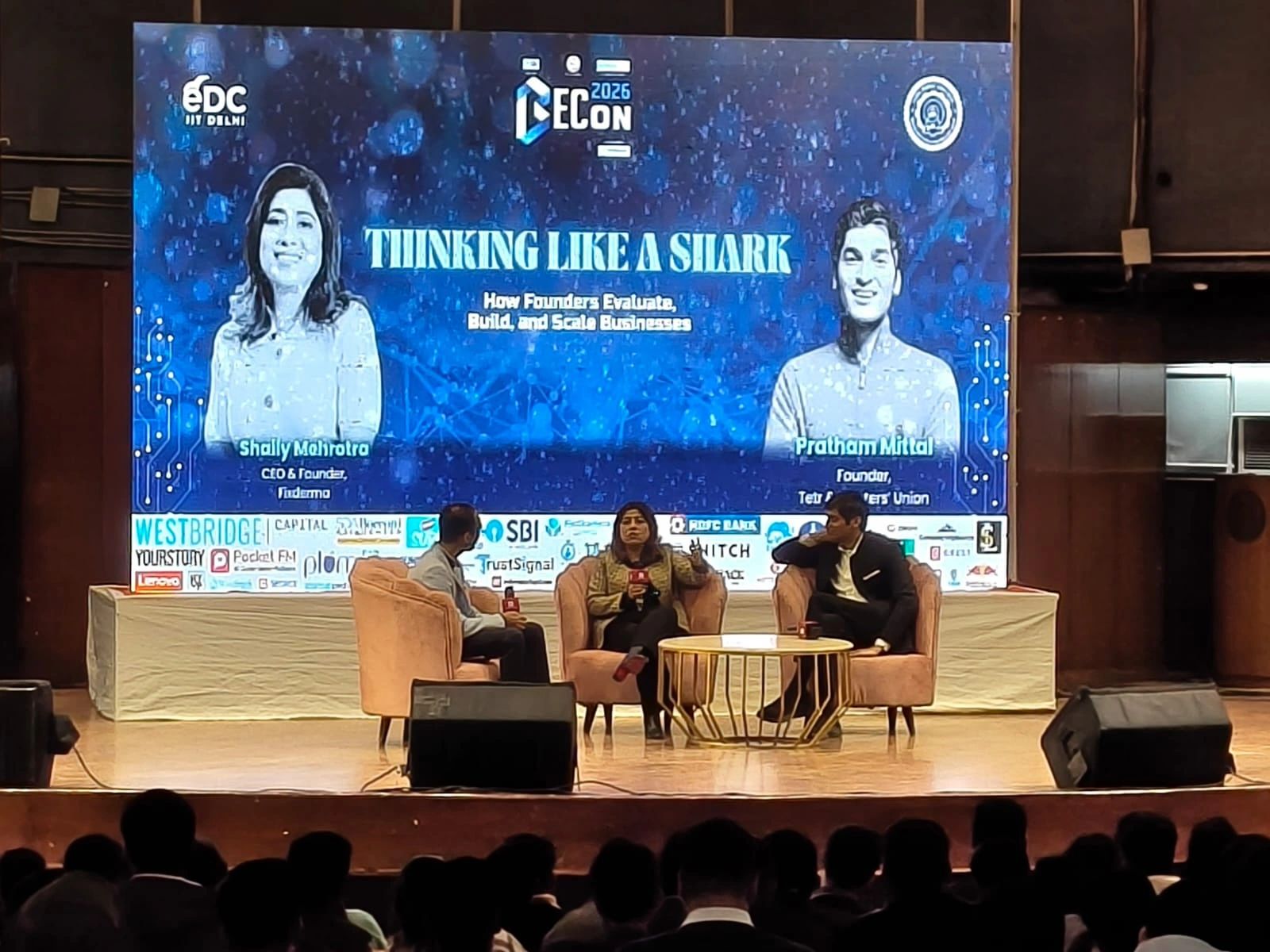
One of the most useful aspects of the weekend was hearing founders speak candidly about process rather than outcomes.
Sessions featuring Sanjeev Bikhchandani and Ankur Warikoo focused heavily on endurance: the idea that meaningful ventures rarely come from sudden breakthroughs, but from sustained effort over years. That idea resonated with me, especially since research follows a similar rhythm.
The panel with Shaily Mehrotra and Pratham Mittal emphasized something deceptively simple: clarity of the problem matters more than the elegance of the solution. Whether in startups or theoretical models, precision of framing often determines success.
It all wrapped up with the Grand Moonshot pitches. Seeing the pitches was like watching the summit’s entire thesis come to life: experienced hard-tech teams, solving real-world hard problems, with clear strategic importance. Long timelines, heavy capital requirements, and a buyer who actually exists. That is a harder business to build and a much harder one to displace.
Perspectives beyond startups
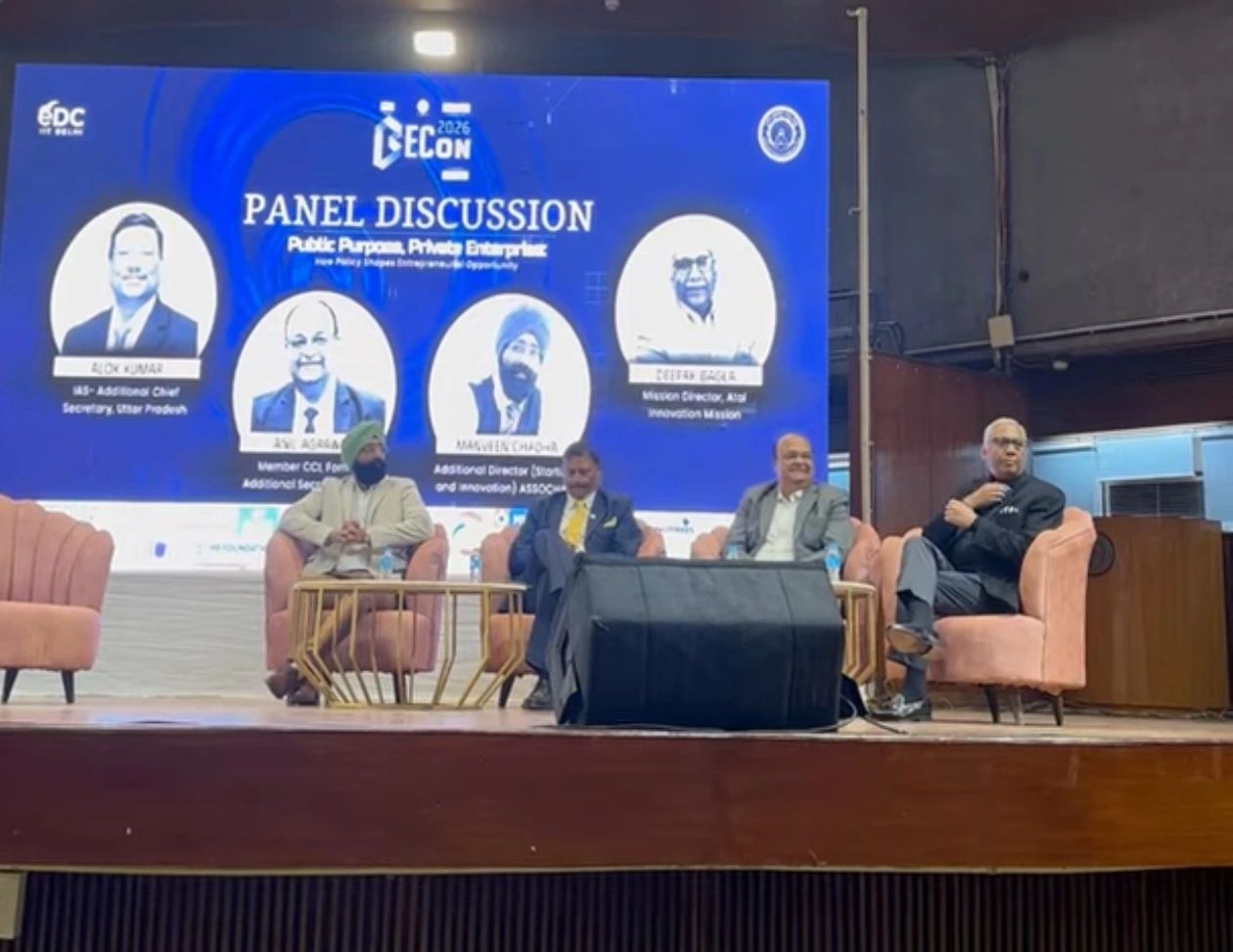
Some talks stood out because they widened the scope of discussion.
Ashneer Grover spoke with his usual directness about markets and decision-making under uncertainty. Nitin Vijay discussed how education must evolve to support innovation rather than merely certify it.
Air Chief Marshal RKS Bhadauria (Retd.) spoke with a clarity that was almost jarring. He talked about defense needs not as abstract “sectors,” but as specific, urgent gaps. When he mentioned brain drain as a national security risk, you could feel the room change. None of it was theory. After that, the deep-tech pitches stopped sounding ambitious and started sounding necessary.
What stayed with me afterwards
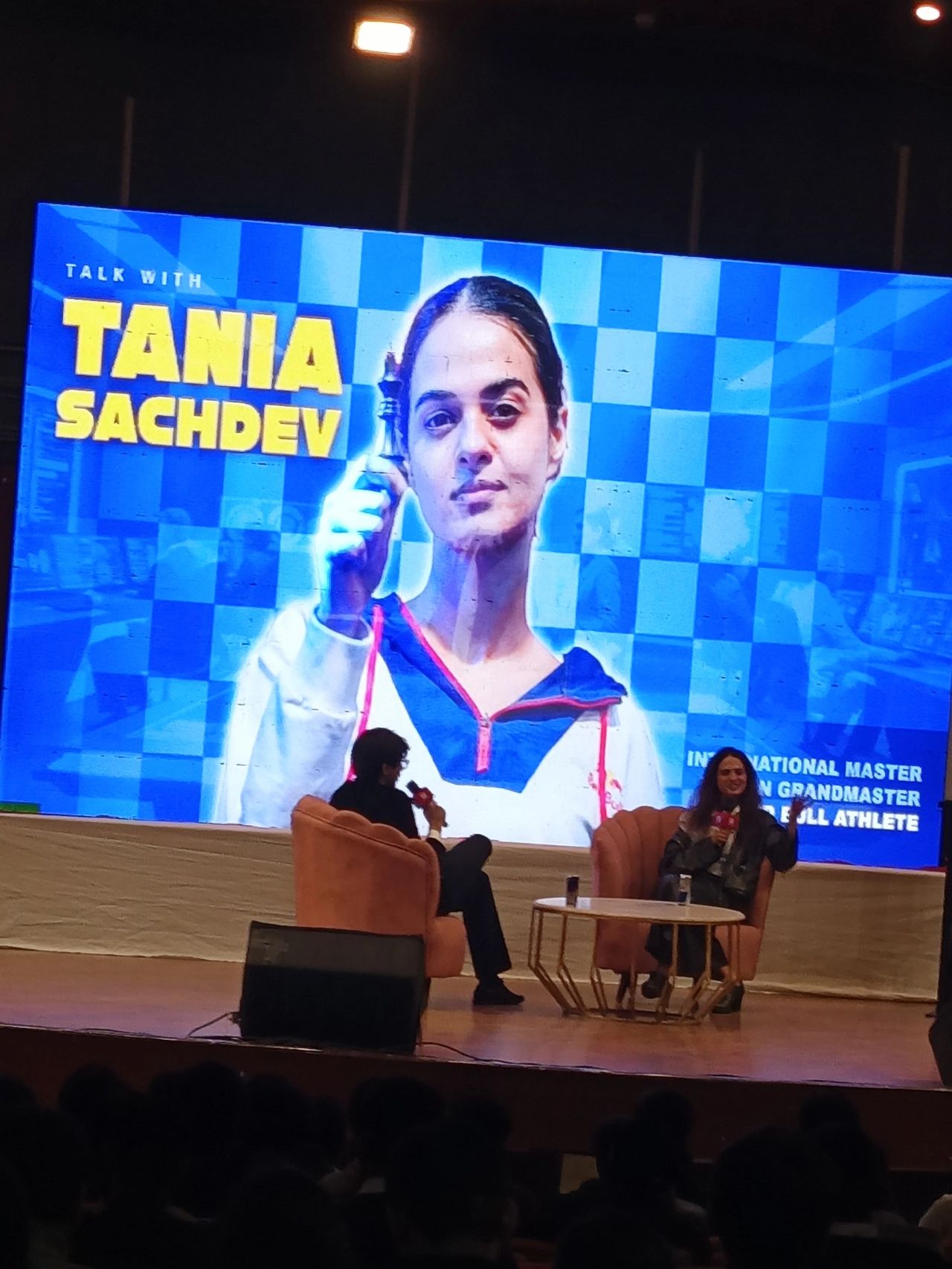
Looking back now, what stayed with me most was the environment itself, more than any single talk.
Being surrounded by people thinking seriously about building things (whether companies, research labs, or technological platforms) created a sense of momentum. Conversations moved easily between AI, semiconductors, deep-tech startups, and where innovation in India is heading. It reminded me that progress rarely happens in isolation, research included. It accelerates when ideas circulate among people willing to test them.
What I took away
I did not return with a startup idea or a business plan. What I took instead was a stronger appreciation for long-term execution, a reminder that depth of understanding compounds, and the sense that interdisciplinary work tends to open the most interesting directions.
For someone balancing theoretical research, AI systems, and quantitative modeling, the weekend quietly reinforced a principle which I personally follow: build foundations first, scale later.
BeCon did not give me answers. It sharpened several questions I am still thinking about, and sharper questions are worth more than borrowed answers.