What the AI Vibe Sprint Actually Taught Me
Execution has become cheap. Most AI events are still selling the expensive half.
There is a version of these events that feels more like a trade show than a workshop. A lot of demos. A lot of excitement about what is now possible. Not enough friction. Not enough honest conversation about what is actually hard.
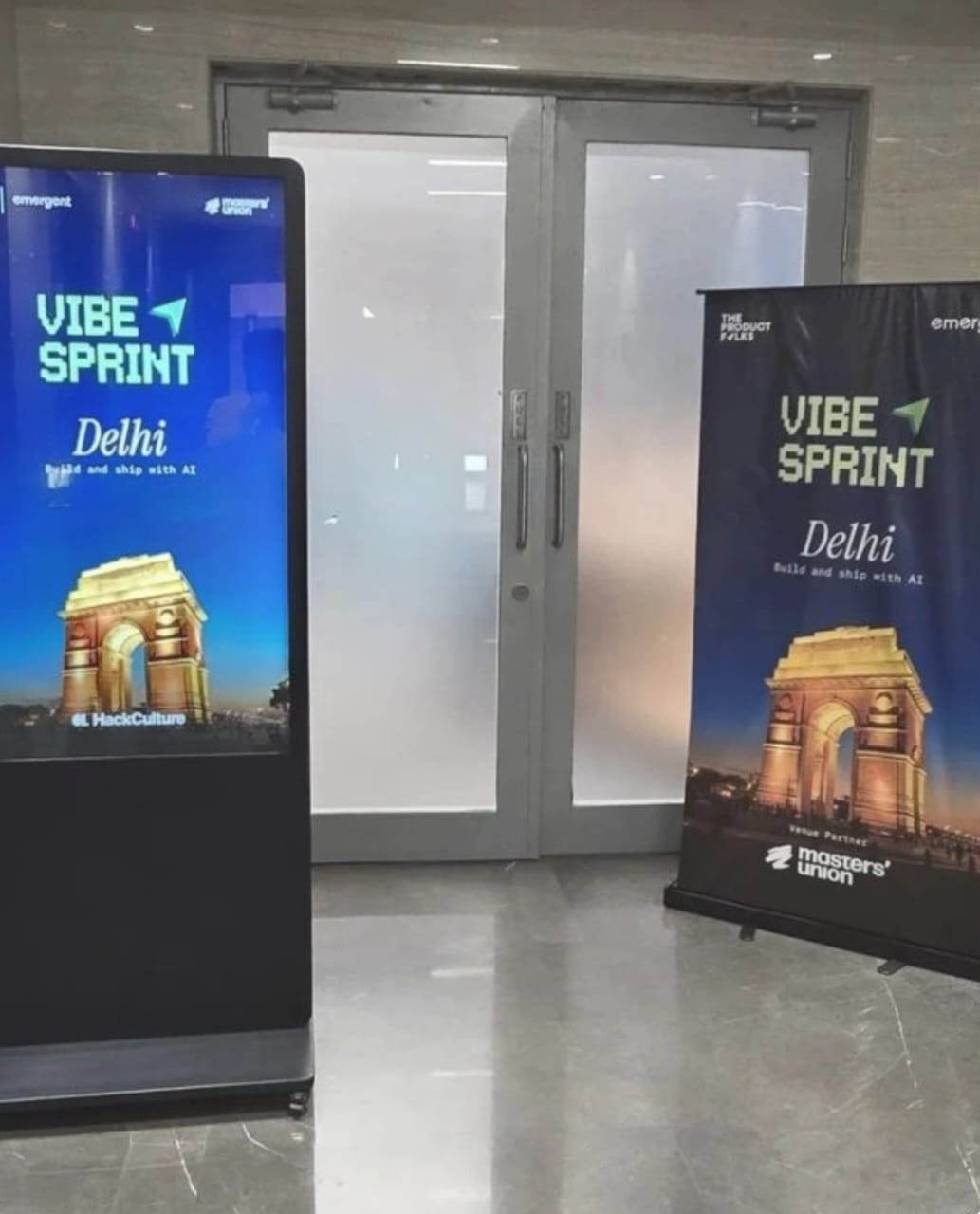
The AI Vibe Sprint Delhi NCR hosted by The Product Folks and Emergent, was not that version.
I came in skeptical of the “vibe coding” framing. I left thinking the framing points at something real, even if the word itself is doing a lot of work.
What “Vibe Coding” is actually about
The term sounds like it is about looseness building without a plan, following intuition, moving fast and not worrying about the rest.
That is not quite what I observed.
What I think it actually describes is a shift in where the cognitive effort goes when you are building with AI.
The syntax is no longer the hard part. The boilerplate is gone. The infrastructure scaffolding that used to eat hours is now something you can talk into existence in minutes. So the work moves upstream into problem framing, into product clarity, into the question of what you are actually trying to do and for whom.
Prompting feels less like giving commands and more like communicating product intent.
That reframe matters. Because it means the skills that make a good builder are shifting. Not disappearing shifting. The people in the room who moved fastest were not the ones who knew the most about how to instruct a model. They were the ones who had thought hardest about the problem.
The thing that kept coming up
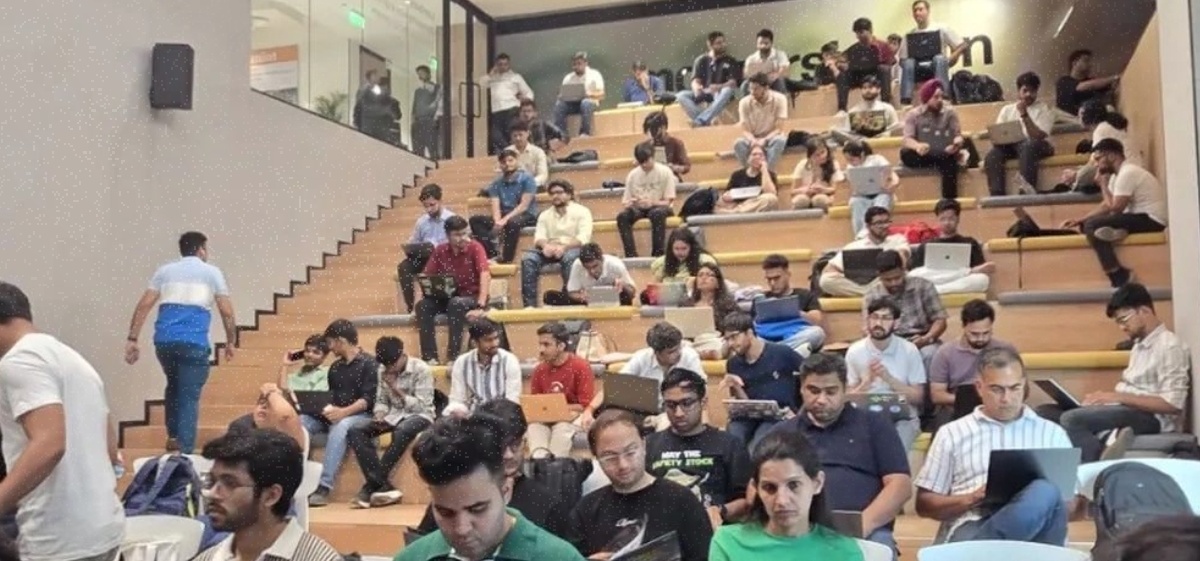
Across the conversations I had with builders, PMs, founders, developers one tension kept surfacing in different forms:
Execution has become very cheap. Which means the bottleneck is no longer “can we build this?”
It is “are we building the right thing?”
That is a capital allocation question wearing an engineering costume. When execution stops being the constraint, the return goes to whoever picks the right problem.
And that question is harder than it sounds, because it does not get easier just because building gets faster. If anything, cheap execution removes a useful forcing function. When building something takes three months, you are forced to think carefully before you start. When it takes three days, it is tempting to start before the thinking is done.
The sprint format made this visible in real time. Teams that had a clear problem statement moved quickly and produced things that felt coherent. Teams that started with a general direction spent a lot of their time discovering what they actually wanted to build.
That is not a criticism, it is the honest shape of the problem. It was useful to watch it happen in compressed form.
On experimentation being cheap
One thing I kept sitting with:
Ideas that once took weeks can now be validated in hours.
This is true. And it is genuinely significant. The cost of being wrong has dropped substantially. You can test an assumption about user behavior with a working prototype instead of a wireframe. You can throw three different framings at a problem and see which one produces something people actually want to use.
But I think there is a second-order effect that does not get talked about enough.
When experimentation is cheap, the constraint becomes attention, yours and your users’. You can generate ten variations of a product in a day. You can only think carefully about one or two of them. The ability to build faster does not automatically mean you build better. It means you have more surface area to cover, and you need better judgment about which surface area matters.
The people I found most interesting at the sprint were the ones who were using the speed deliberately, picking a specific question they wanted to answer and using the tools to answer it quickly, rather than just building because building was fast.
The conversations between the building
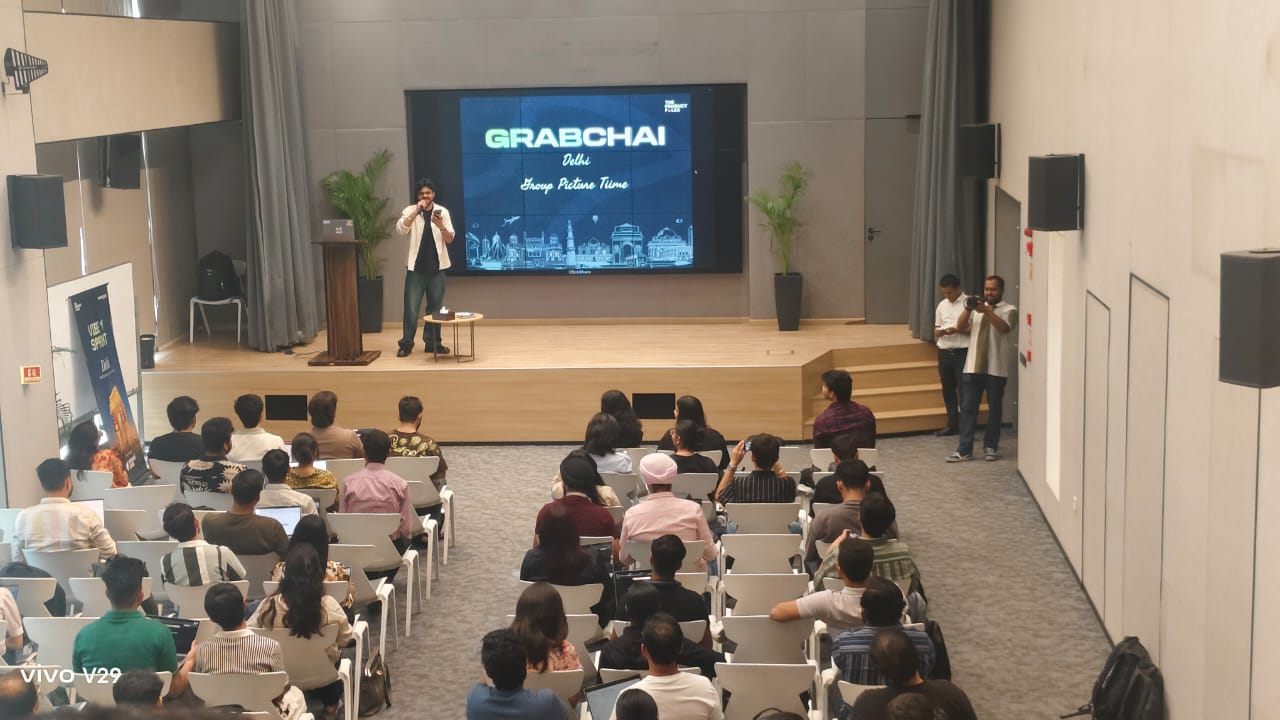
I want to say something about the people in the room, because it is the part that is hardest to capture in a recap.
Delhi NCR has a particular texture to its builder community. There is something slightly less polished about it than Bangalore less startup-industry, more just people with specific problems they want to solve who have found their way to the tools and the rooms where other people are doing the same thing.
I had a conversation with a founder who was working on something in vernacular language AI that I had not thought about carefully before. A developer who had been using AI tooling to compress what used to be two-week solo projects into two-day ones and was trying to figure out what to do with the recovered time. A PM who was thinking hard about whether the metrics they had been using to evaluate product success still made sense in a world where prototyping was this fast.
None of these conversations were long. But they were specific, and specificity is what I look for.
What I actually took away
I came in thinking the interesting question was about speed.
I left thinking the interesting question is about clarity.
Not clarity in the sense of having a complete plan before you start; that is its own failure mode. But clarity in the sense of being able to articulate what you are trying to learn from building something. What assumption you are testing. What it would look like if you were wrong.
AI is making execution faster. That is real and it matters. But clarity of thought is still the actual advantage: maybe more so now, because the gap between people who have it and people who do not is no longer disguised by execution friction.
The bottleneck is shifting from “can we build it?” to “are we building the right thing?”
That shift is not just a product management question. It is a thinking question. And I do not think the tooling solves it.
Why events like this still matter
There is a reasonable argument that you do not need to be in a room with people to build things anymore. You have the tools. You have the internet. You can work asynchronously across timezones on whatever you want.
That argument is correct and also misses the point.
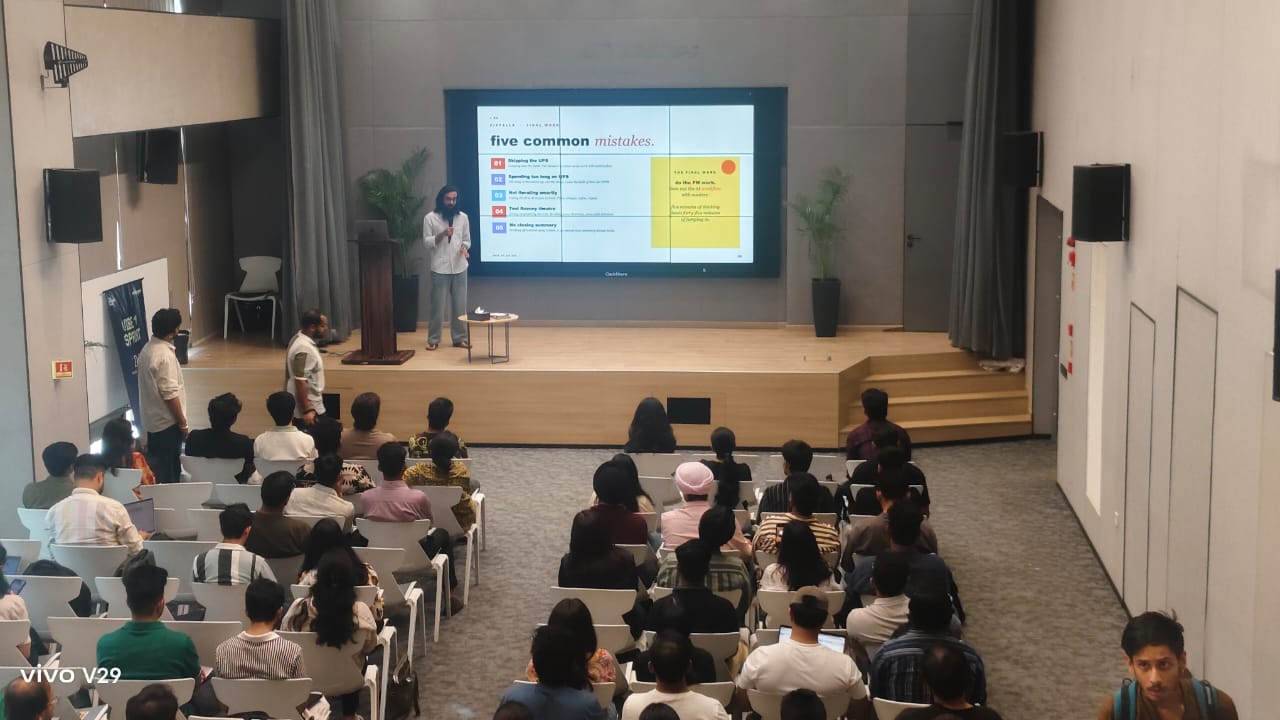
The value of a sprint like this is not the content. It is the calibration. Spending a day in a room with a hundred people who are all trying to figure out the same things you are, how to use these tools well, what problems are worth solving, what the actual constraints are, updates your priors in ways that reading about it does not.
I walked away with new perspectives, new connections, and a clearer sense of what I want to build next.
That is the bar. Most events do not clear it.
Thanks to The Product Folks and Emergent for putting this together.
Related: